
Overview
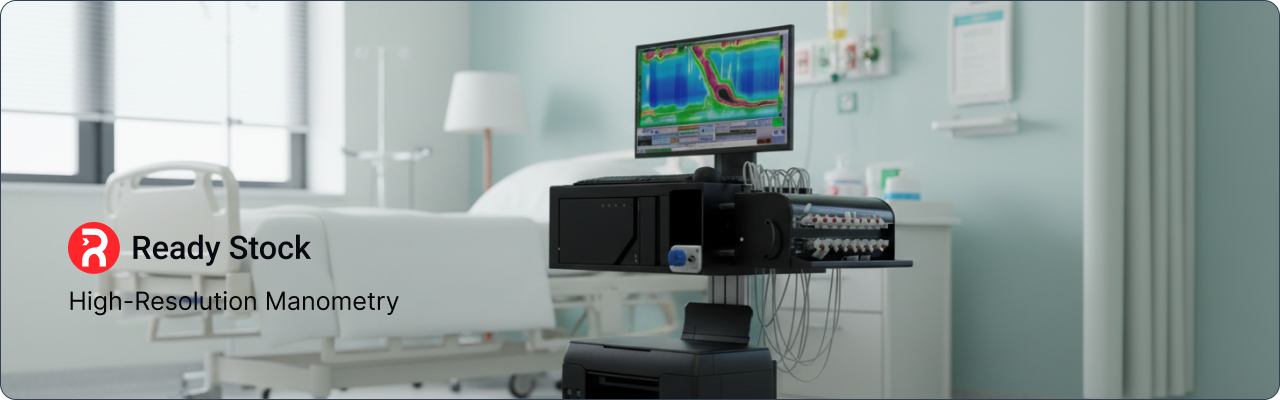
High-Resolution Manometry
A gastrointestinal motility diagnostic system that measures intraluminal pressure activity
using closely spaced pressure sensors for unrivaled clinical precision.
Request a DemoOverview
High-resolution Manometry (HRM) is a gastrointestinal motility diagnostic system that measures intraluminal pressure activity in the gastrointestinal tract using a series of closely spaced pressure sensors. For a Manometry system to be classified as "high-resolution" as opposed to "conventional", the pressure sensors need to be spaced at most 1 cm apart. Two dominant pressure transduction technologies are used: solid state pressure sensors and water perused pressure sensors.
Each pressure transduction technology has its own inherent advantages and disadvantages. HRM systems also require advanced computer hardware and software to store and analyze the Manometry data.
WE CAN PERFORM BOTH ESOPHAGEAL MANOMETRY AND ANORECTAL MANOMETRY ON SAME HARDWARE, ONLY CATHETER & SOFTWARE IS DIFFERENT.
Esophageal Manometry
Esophageal Manometry (muh-NOM-uh-tree) is a test that shows whether your esophagus is working properly. The esophagus is a long, muscular tube that connects your throat to your stomach. When you swallow, your esophagus contracts and pushes food into your stomach. Esophageal Manometry measures the contractions. The test also measures the force and coordination of esophageal muscles as they move food to your stomach. During esophageal Manometry, a thin, flexible tube (catheter) that contains pressure sensors is passed through your nose, down your esophagus and into your stomach. Esophageal Manometry can be helpful in diagnosing certain disorders that can affect your esophagus.
Do you work with agencies or offer white-label services?
Esophageal manometry is used to check whether the muscles in the esophagus are working properly. When the muscles don’t work as they should, you may experience symptoms such as heartburn, trouble or pain when swallowing, chest pain and regurgitation (food coming back up after swallowing).
Esophageal manometry helps determine what is causing these symptoms, which could be conditions such as:
Esophageal manometry helps determine what is causing these symptoms, which could be conditions such as:
Anorectal Manometry
Anorectal manometry is a noninvasive procedure to evaluate the function of the rectal and anal muscles. This group of muscles, called the anorectal sphincter, controls how stool is released from your body. Anorectal manometry can help determine if these muscles are too loose, too tight or are not engaging at the right moment. This test measures the pressures created by the muscles, the sensation in the rectum (the passageway between the large intestine and the anus), and the neural reflexes necessary for normal bowel movements.
Who may need Anorectal manometry?
Coordination between specialized muscles and nerves in the rectum and anal canal is essential for bowel movements. Weak or untimely contractions of the anal sphincter muscles can lead to fecal incontinence, while tight muscles during pushing may contribute to constipation. Anorectal manometry is a diagnostic test for conditions like fecal incontinence and constipation. If you're experiencing persistent bowel issues, your doctor may suggest anorectal manometry.
Anorectal manometry can also be used to evaluate people with:
Anorectal manometry can also be used to evaluate people with:
What happens during anorectal manometry?
Anal Manometry Test Results
Test results can help your doctor identify the cause of constipation or incontinence and inform a treatment plan.
For instance, the test may reveal weak anal sphincter muscles or poor sensation in the rectum that can contribute to fecal incontinence. These problems can be treated. Biofeedback techniques using anal manometry and special exercises of the pelvic floor muscles can strengthen the muscles and improve sensation.
Test results may show that the anal sphincter muscles do not relax appropriately when you are pushing to have a bowel movement, which may cause constipation. These muscles, too, can be retrained with biofeedback techniques.
BIO FEEDBACK
Biofeedback for anorectal manometry is a therapeutic technique used to treat conditions related to dysfunction of the anal sphincter muscles and pelvic floor. Anorectal manometry is a diagnostic test used to evaluate the function of the rectum and anal sphincter muscles by measuring pressures and reflexes in the rectum and anus.The goal of biofeedback therapy is to teach patients how to improve the coordination and strength of their pelvic floor muscles and anal sphincter muscles. This can help alleviate symptoms associated with conditions such as fecal incontinence, constipation, and pelvic floor dysfunction.
Biofeedback for anorectal manometry is typically performed by a trained therapist in a clinical setting. The therapist will work with the patient to develop a personalized treatment plan that may include exercises, relaxation techniques, and behavioral modifications to improve muscle function and control.
Overall, biofeedback therapy for anorectal manometry can be an effective non-invasive treatment option for individuals experiencing pelvic floor dysfunction and related symptoms.
Antroduodenal Manometry
What is antroduodenal-manometry?
The antrum is the lower part of the stomach. The duodenum is the first portion of the small intestines. The antrum of the stomach and the duodenum are connected by a muscle called the pyloric sphincter.
Manometry is the study of pressure. Antroduodenal manometry is a way to measure and identify any abnormalities in the coordination and strength of the muscle contractions in the stomach and the duodenum.
Abnormalities in strength or coordination of contractions may cause improper digestion. This may result in symptoms including loss of appetite, nausea, gagging, vomiting, abdominal distention, abdominal pain, diarrhea, and constipation.
What happens during the test?
You will be asked not to eat for several hours before testing begins.
How long does the test take?
Does the test hurt?
The measurement of pressure during the antroduodenal-manometry is painless; you will not feel the tube inside your stomach and intestine.
Colonic Manometry
Briefed Information
Colonic manometry is a test that measures the pressure and function of the colon's muscles and nerves. It's used for conditions like chronic constipation. A small catheter with pressure sensors is inserted into the rectum to gather data on muscle coordination and stool transit time. Our company specializes in top-quality colonic manometry equipment trusted by healthcare professionals worldwide. Our user-friendly products, including catheters and monitoring systems, provide accurate, real-time data for diagnosing and treating gastrointestinal disorders. We're committed to exceptional customer service, offering support and expertise to help you make the most of our products. Thank you for considering us for your colonic manometry needs. We're here to assist you in providing the best care for your patients.